
Drains usually keep blocking because waste continues to build up, an earlier blockage has not been fully removed, or a fault in the pipework is trapping debris. Common causes include grease, hair, wet wipes, tree roots, damaged pipes and displaced joints.
A one-off blockage does not necessarily mean your drainage system needs repairing. However, if the same drain repeatedly blocks after being cleared, it is worth finding out why. Further investigation can help establish whether the pipe needs more thorough cleaning or whether a defect is contributing to the problem.
Below, we explain eight common causes of recurring blocked drains, how to reduce the risk, and when professional investigation may be needed.
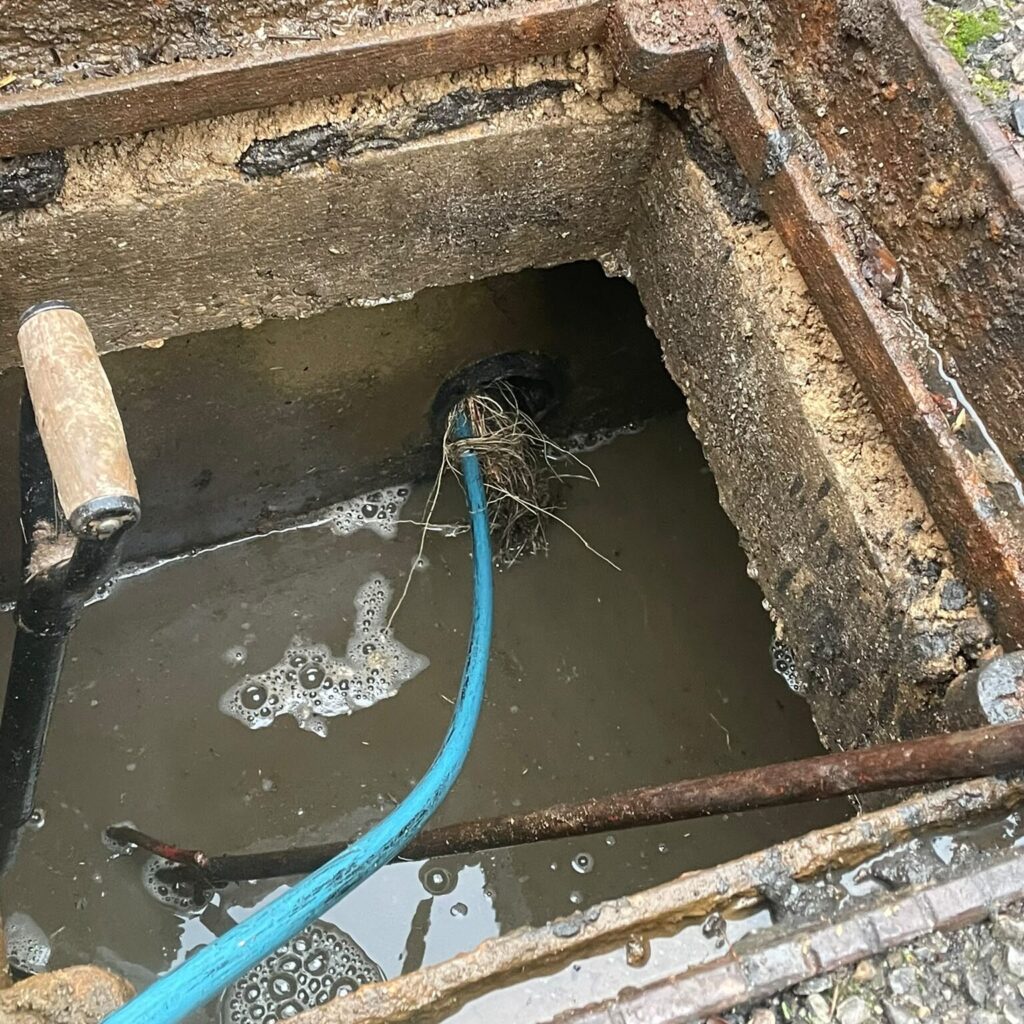
8 Common Reasons Your Drains Keep Blocking
1. Fat, oil and grease build-up
Cooking fats, oils and grease can collect inside kitchen waste pipes and underground drains. They can coat the pipe walls, trap food particles and gradually restrict the space available for wastewater to flow.
Clearing a passage through the blockage may restore drainage temporarily, but deposits left on the pipe walls can continue to collect waste.
To reduce the risk, keep cooking fats out of the sink, scrape food leftovers into the appropriate bin, and wipe greasy pans before washing them.
2. Hair and soap residue
Hair, soap residue and other bathroom debris can collect around plugholes, traps and waste pipes. As the build-up increases, you may notice that your shower, bath or basin takes longer to empty.
Removing visible hair from the plughole can help, but material further along the waste pipe may still restrict the flow.
Use a suitable hair catcher and clean it regularly. If the same fixture repeatedly drains slowly, the obstruction may need to be investigated beyond the plughole.
3. Wet wipes and unsuitable items flushed down toilets
Wet wipes, sanitary products, nappies and other household rubbish should not be flushed down the toilet. These materials can become lodged in pipework or catch on existing deposits and defects, allowing a larger blockage to form.
Even wipes labelled as flushable are best kept out of the drainage system.
Only flush pee, poo and toilet paper. Keep a bathroom bin available for everything else.
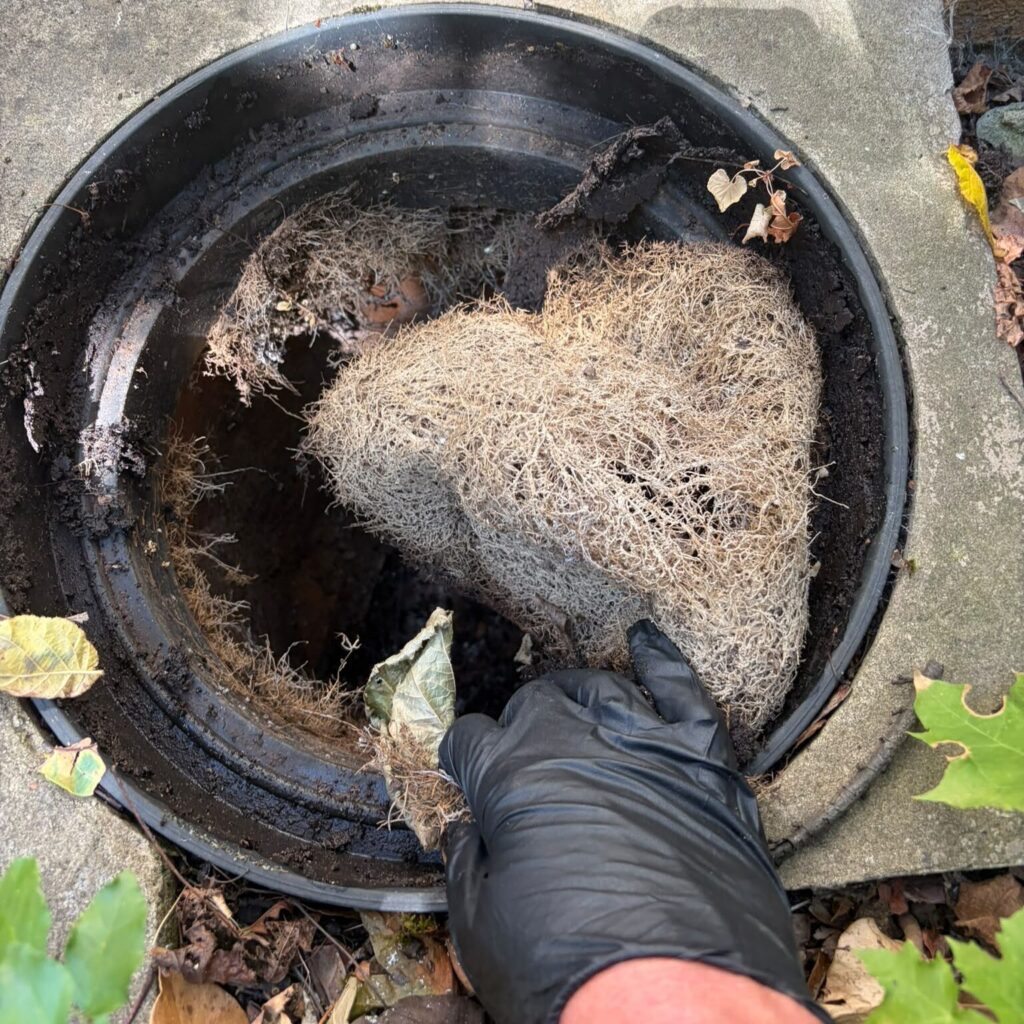
4. Tree roots entering the pipework
Tree roots can enter underground drains through cracks, gaps or defective joints. Once inside, they can grow within the pipe and catch passing waste.
Removing the roots may restore flow, but the opening through which they entered may also need attention. Otherwise, the problem can return.
Root ingress is usually hidden below ground. A CCTV drain inspection can help establish where roots have entered and assess the surrounding pipework.
5. Cracked, damaged or collapsed pipes
Damaged pipework can create rough edges, restrictions or obstructions that catch debris. A collapsed section may severely restrict or prevent wastewater from passing through.
Possible causes of damage include deterioration, ground movement and pressure on the pipework. However, repeated blockages alone cannot confirm that a pipe is damaged.
Where a defect is contributing to the problem, clearing the blockage may provide only temporary relief. The appropriate repair depends on the type, location and extent of the damage.
6. Displaced or misaligned pipe joints
Drainage pipes are connected in sections. If those sections move out of alignment, the joint can create a ledge or restriction where waste catches.
A displaced joint may also allow soil or roots to enter the drainage system, adding to the obstruction.
If blockages repeatedly occur in the same section, a camera inspection can help identify whether a joint defect is contributing to the problem.
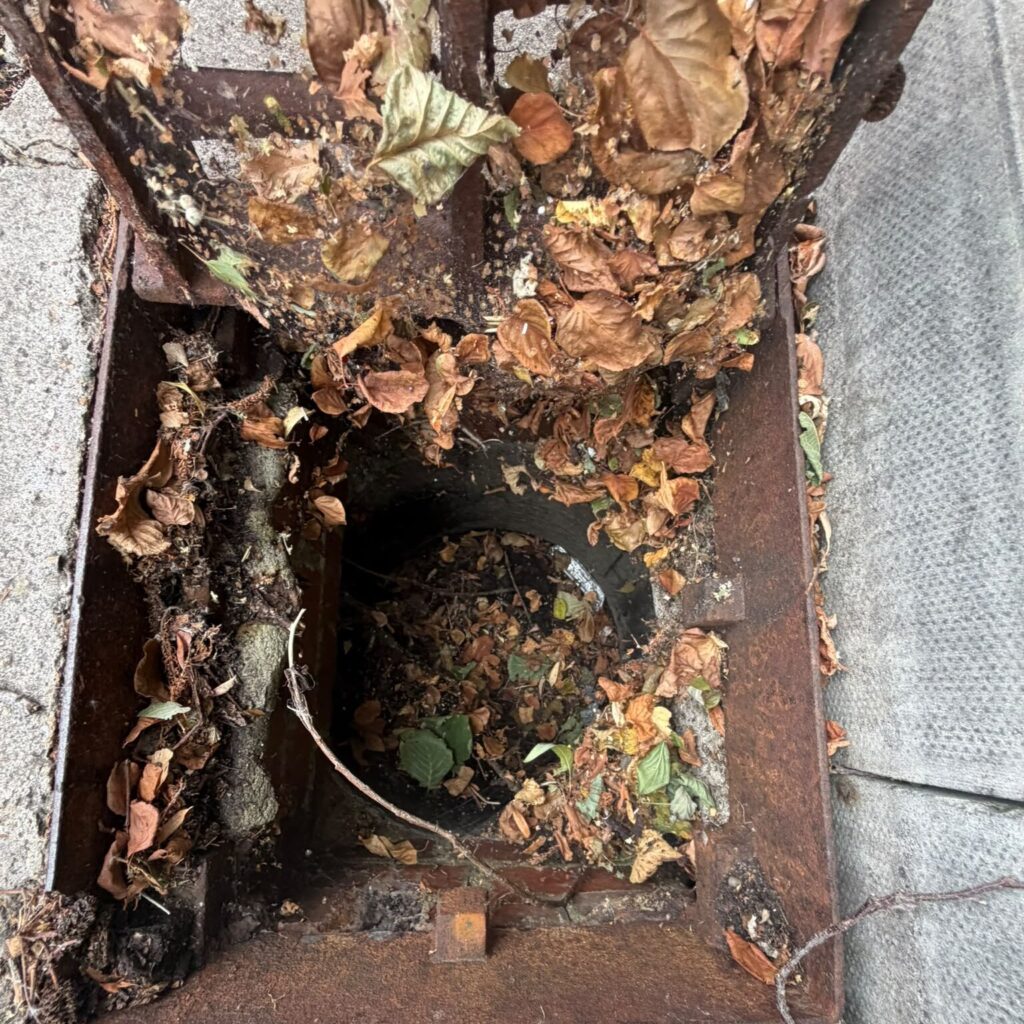
7. Leaves, silt and outdoor debris
Outside gullies and surface water drains can become restricted by leaves, soil, silt and other debris. This may be especially noticeable during autumn or after heavy rain washes material towards drainage openings.
Keeping accessible grates clear can help prevent surface debris from entering. However, removing leaves from the top will not necessarily clear material already trapped further inside.
If water continues to collect after visible debris has been removed, the drainage route may need further investigation.
8. Poor pipe gradient or sagging pipework
Gravity drainage pipes need an appropriate fall to carry wastewater away. If a section has an unsuitable gradient or has sagged, water and solids can collect in a low spot.
This can contribute to recurring deposits and blockages, even when unsuitable items are kept out of the drains.
Cleaning may remove the accumulated waste, but it does not correct the pipe’s position. A professional assessment can help establish whether the drainage layout or condition requires attention.
Why does a drain block again after being cleared?
A drain flowing again does not always mean the cause of the blockage has been resolved.
Recurring problems can happen when:
- Deposits remain inside the pipe. A passage has been opened through the obstruction, but grease, silt or other material is still restricting the pipe.
- Unsuitable waste continues to enter the system. Further grease, wipes or food waste can create another blockage.
- A pipe defect continues to catch debris. Cracks, displaced joints or sagging sections remain after the obstruction is removed.
- Roots return through an unresolved opening. Clearing root growth does not necessarily repair the damaged joint or pipe.
The right response depends on the cause. Some drains need more thorough cleaning; others need a repair or a change in how waste is disposed of.
If you need repeated drain unblocking, explain when the problem returns, which fixtures are affected and what previous clearance work has involved. This information can help the engineer investigate.
How can you reduce the risk of blocked drains?
Everyday habits can reduce waste-related blockages:
- Collect cooled cooking fat for appropriate disposal instead of pouring it down the sink.
- Scrape food leftovers into the appropriate bin and wipe greasy plates and pans before washing.
- Use sink strainers and shower hair catchers, emptying and cleaning them regularly.
- Keep wet wipes, sanitary products, nappies and household rubbish out of toilets.
- Remove visible leaves and debris from accessible outdoor drainage grates.
- Arrange investigation if slow drainage or blockages repeatedly return.
These steps help limit the material entering your drains. They cannot repair damaged pipes, displaced joints or an unsuitable pipe gradient.
For more everyday prevention tips, see Wessex Water’s advice on avoiding drain blockages.
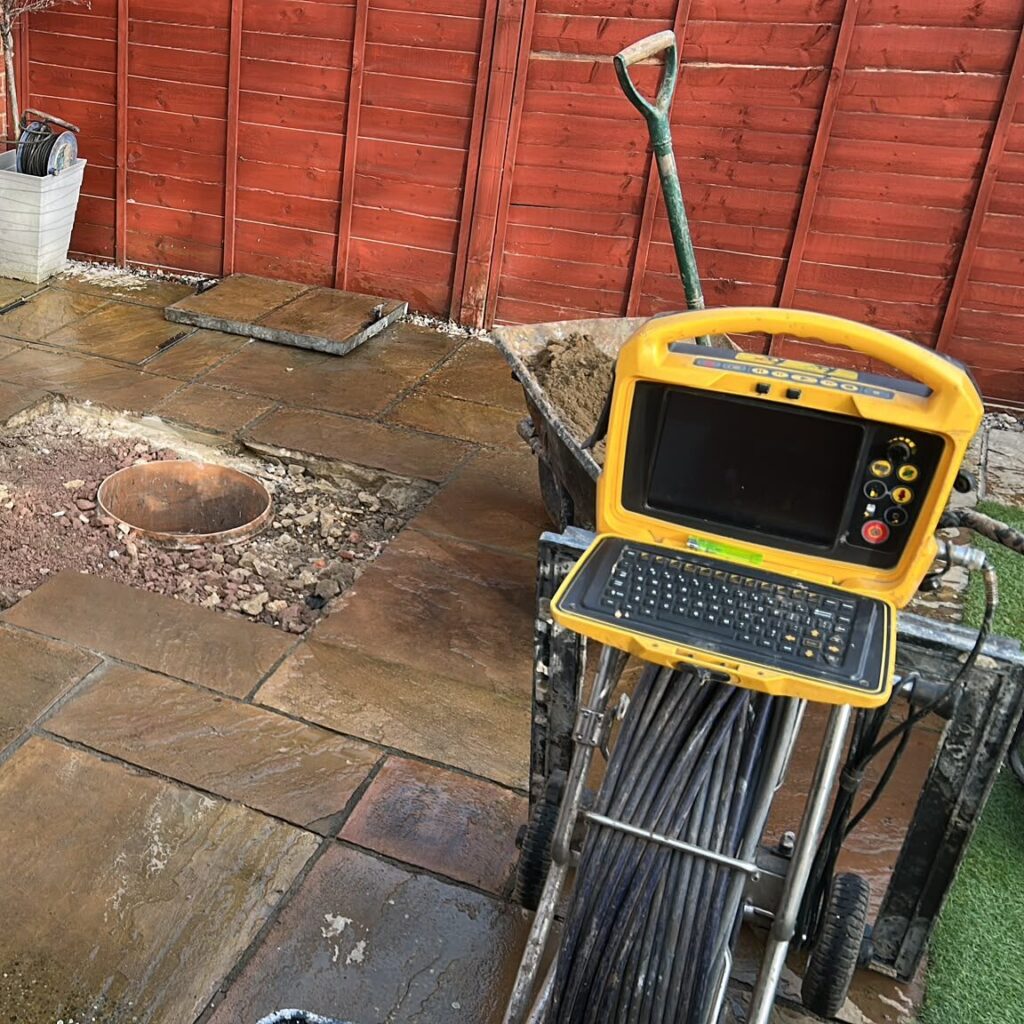
When should you arrange a CCTV drain survey?
A CCTV drain survey may be appropriate when the same drain keeps blocking, the cause is unclear, or a problem returns despite clearance.
The camera allows an engineer to inspect accessible pipework for issues such as root ingress, cracks, displaced joints, remaining deposits and deformation.
An obstruction may need to be cleared before the camera can pass through and inspect the affected section properly.
The findings can help determine whether further cleaning is sufficient or whether repair work is needed. A survey does not automatically mean your drains require replacing.
Can recurring blocked drains be repaired without digging?
In some cases, damaged drains can be repaired using patch repairs or drain relining, reducing the need for excavation.
A patch repair may be suitable for a localised defect, while relining may be appropriate for a longer damaged section.
However, no-dig repairs are not suitable for every problem. Severely collapsed pipework, significant displacement or drainage that needs repositioning may require excavation and replacement.
The recommended method should address the identified fault and take account of the pipe’s condition and accessibility.
When is a blocked drain urgent?
Seek prompt assistance if sewage is backing up, a toilet or outside drain is overflowing, or wastewater is entering your property.
Stop using affected fixtures where possible while arranging help, and keep people and pets away from wastewater.
Recurring slow drainage, smells or gurgling also warrant investigation, although these symptoms can have more than one cause. Do not assume that a particular sound or smell confirms damaged pipework.
Need help with drains that keep blocking?
RAM Drainage Solutions provides drain unblocking, CCTV drain surveys and drain repairs for homes and businesses across Southern England.
If your drainage problem keeps returning, our team can investigate the cause and explain the appropriate next steps. Depending on the findings, this may involve further cleaning, a suitable no-dig repair, or excavation and replacement.
Call 07398 990756 to discuss the problem and check engineer availability in your area, or contact RAM Drainage Solutions to arrange an assessment.
Our emergency phone line is available 24 hours a day.